
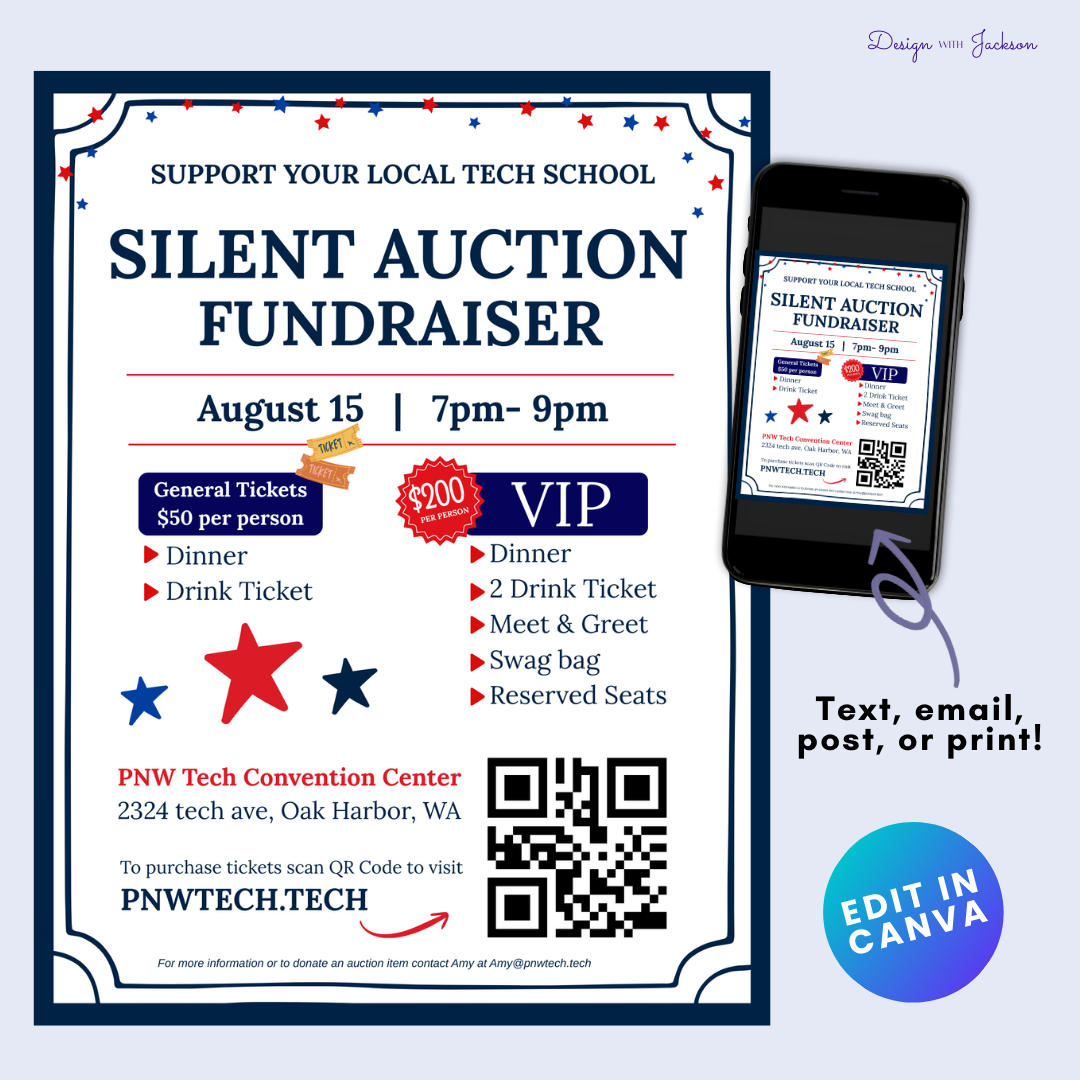
Silent Auction Dos and Don’ts: How to Raise More and Avoid the Chaos
Planning your first silent auction? Whether it’s for a school, church, or political campaign, you’ll quickly realize that success isn’t luck — it’s logistics. The right planning makes donors eager to give, guests excited to bid, and checkout stress-free. The wrong approach? Confusion, unsold items, and a long night you don’t want to repeat.
Here’s a straightforward list of dos and don’ts to help you run a smooth, profitable event, backed by real data and field-tested tips
✅DO: Start Early and Curate with Purpose
A great auction begins months in advance. Start outreach 3–6 months before your event, and form a small procurement team whose only job is collecting quality donations.
According to OneCause’s 2024 fundraising report, nonprofits that began soliciting donations at least 90 days in advance saw 32% higher participation rates. [1]
Focus on items that fit your audience: local experiences, weekend getaways, restaurant gift cards, or themed baskets. Over-collecting random or low-value items actually hurts your event by spreading bids too thin.
❌ DON’T: Accept Every Donation Offered
It’s tempting to say yes to everything, but that can clutter tables and slow bidding. GiveSmart’s analysis of 880,000 auction items found that nearly 30% received zero bids. [2] Those unused items eat up space and volunteer time. If it’s not exciting, combine it into a bundle or politely decline.
✅ DO: Display Clearly and Set Smart Bid Ranges
Presentation sells. Each item should have a clear display card listing: name, donor, value, rules, and starting bid.
A good rule of thumb is to start bids at 30–50% of fair market value and increase in 10% increments enough to build momentum without scaring bidders away. AFP Global notes that moderate increments improve competition and final bid totals. [3]
If you’re using printed bid sheets, keep them neat and legible. If possible, upgrade to mobile bidding software; Double the Donation reports that mobile or hybrid auctions raise 30% more than paper-only events because guests can bid from anywhere, even the dessert line.[4]
❌ DON’T: Overcomplicate Checkout
The most stressful part of any silent auction is the end. Long lines or lost bid sheets turn enthusiasm into frustration.
Plan your checkout flow in advance: designate one station for payments, another for item pickup, and make sure volunteers know who handles what.
If you’re using an app, test Wi-Fi or cell service before the event, poor connections can freeze transactions and delay everyone.
✅ DO: Make Donors and Bidders Feel Appreciated
People donate and bid when they feel seen. Recognition during the event (“Thanks to Greenleaf Market for sponsoring tonight’s baskets!”) encourages future giving.
Follow up quickly afterward, send thank-you emails, photos, and tax receipts within a week. DonorPerfect found that organizations that followed up within seven days retained 42% more repeat donors year-over-year.[5]
❌ DON’T: Forget to Promote and Pre-Engage
If guests arrive without knowing what’s up for bid, your auction will underperform.
Share sneak peeks on social media, send a short email with highlight items, and display a digital catalog near check-in. Even one preview post can boost attendance and bidding by 15%. [6]
✅ DO: Think Like a Guest
Walk through your event like a participant:
- Are items easy to find and well-lit?
- Are bid sheets accessible from both sides of a table?
- Is there enough space between tables for traffic flow?
- Are food and drinks located away from bidding areas to prevent spills?
Small tweaks in layout and signage can raise engagement dramatically.
❌ DON’T: Leave Winners Guessing
When bidding closes, announce it clearly, highlight a few top items, and post winner names quickly. Nothing ruins goodwill faster than winners wandering for their prizes or volunteers scrambling to match sheets to items.
✅ DO: Debrief and Learn
After the event, meet with your team while details are fresh. Review what sold well, what didn’t, and what frustrated guests. Record donor contact info for next year. Treat this year’s notes like gold, next year’s auction will thank you!
💡 Final Thoughts
A successful silent auction blends planning, presentation, and personality. Curate exciting items, train your volunteers, and make checkout seamless. Whether you raise $2,000 or $20,000, your reputation depends on how organized you are when the last bidder walks out smiling.
Want professional materials that make your auction look as good as it runs? Visit my Etsy Shop, Design with Jackson for editable Canva templates, bid sheets, signage, and donation forms ready to customize.
And for step-by-step design videos, follow me on Instagram (@DesignWithJackson) for quick tutorials and marketing inspiration.

📚 References
- OneCause, Fundraising Outlook Report 2024.
- GiveSmart, Ultimate Silent Auction Study, 2023.
- Association of Fundraising Professionals (AFP), Silent Auction Budgeting 101.
- Double the Donation, Silent Auction Guide, 2024.
- DonorPerfect, Nonprofit Donor Retention Benchmark Study, 2023.
- BetterWorld, Complete Guide to Planning a Silent Auction, 2023.