
How to Use Every Door Direct Mail (EDDM) for Political Campaigns
If you’re running for office for the first time, there’s one problem every campaign hits early: how do I reach voters if I don’t have a mailing list?
The good news is, you don’t need one. The United States Postal Service created Every Door Direct Mail (EDDM) for exactly this situation, helping local businesses and political campaigns deliver mail to every household in a chosen area without buying a list.
Here’s how it works, what it costs, and how to use it strategically to get your campaign in front of more voters.
What Is Every Door Direct Mail (EDDM)?
EDDM is a targeted mailing service from the USPS that lets you deliver your campaign postcards or flyers to every residential or business address in a specific zip code or postal route.
Instead of names and addresses, your pieces are labeled “Postal Customer, or Current Resident,” and USPS handles the delivery.
It’s designed for small businesses and campaigns that want local visibility, and it’s one of the most cost-effective tools in grassroots politics.
According to Presort Inc.’s 2023 Direct Mail Trends, the average response rate for direct mail campaigns is approximately 4.4%. [1] Many digital marketing reports estimate average ad or email response rates at around 1% or less, depending on industry and targeting.
Why Political Campaigns Love EDDM
1. No Mailing List Needed.
You don’t need voter data or expensive address lists. USPS lets you pick routes online using their free EDDM mapping tool.
2. Affordable Postage.
USPS currently lists an EDDM Retail rate of $0.247 per mailpiece for Marketing Flats. Meanwhile, the standard First-Class postcard rate is $0.61. This means sending 1,000 mailers via EDDM would cost about $247 in postage, whereas the same volume via First-Class postcard mail could reach $610 if mailed individually. Rates may vary by location, mail entry point (Retail vs BMEU), and mailpiece specifications.
3. Target by Neighborhood.
EDDM helps you focus on specific neighborhoods, zip codes, or even carrier routes that align with your voter base, for example, high-turnout precincts or certain city wards.
4. No Permit Required.
Normally, bulk mail requires a postal permit, which costs $250+ per year. EDDM Retail skips that requirement; anyone can use it.
5. Easy Drop-Off.
You can bundle your mailers, fill out a simple USPS form, and drop them off at your local post office. Most print vendors even handle this step for you.
EDDM Size and Design Requirements
EDDM pieces have to meet USPS “flat mail” standards — meaning they’re too big to count as standard postcards but small enough to fit through mail processing equipment.
| Approved EDDM Sizes | Examples of Use |
|---|---|
| 6.25 x 9 in. | Standard campaign postcard |
| 6.25 x 11 in. | Oversized postcard for name recognition |
| 8.5 x 11 in. | One-page mailer or issue piece |
| 9 x 12 in. | Large-format for final push before Election Day |
Anything smaller than 6.25×9 won’t qualify, and anything larger than 12×15 can’t be mailed through EDDM.
Check out our Political Postcard Size Guide — it breaks down the most common campaign mailer sizes, cost comparisons, and when to use each one to maximize your outreach.
💡 Pro Tip: The most popular campaign size is 6.25×11 inches: it stands out in the mailbox without costing extra postage.
How Much Does EDDM Cost?
Let’s compare the basic costs (as of early 2024):
| Service | Average Printing (per 1,000) | Postage | Total |
|---|---|---|---|
| EDDM Retail (6.25×11) | $120–$150 | $270–$300 | ≈ $420–$450 per 1,000 |
| First-Class Postcard (4×6) | $75–$100 | $560 | ≈ $635–$660 per 1,000 |
That’s roughly 30%–40% cheaper per mailing — and you reach every mailbox in your area.
How to Use EDDM for Your Political Campaign
Step 1: Pick Your Area
Use the USPS EDDM online mapping tool. Enter your city or zip code, and it will show routes with average household income, number of residences, and cost per route.
If you’re unsure which neighborhoods to pick, check your county elections office website for precinct-level voter turnout maps — they often show which areas have the highest participation. Targeting those routes gives you more return for the same postage.
Step 2: Choose Your Mailer Size and Design
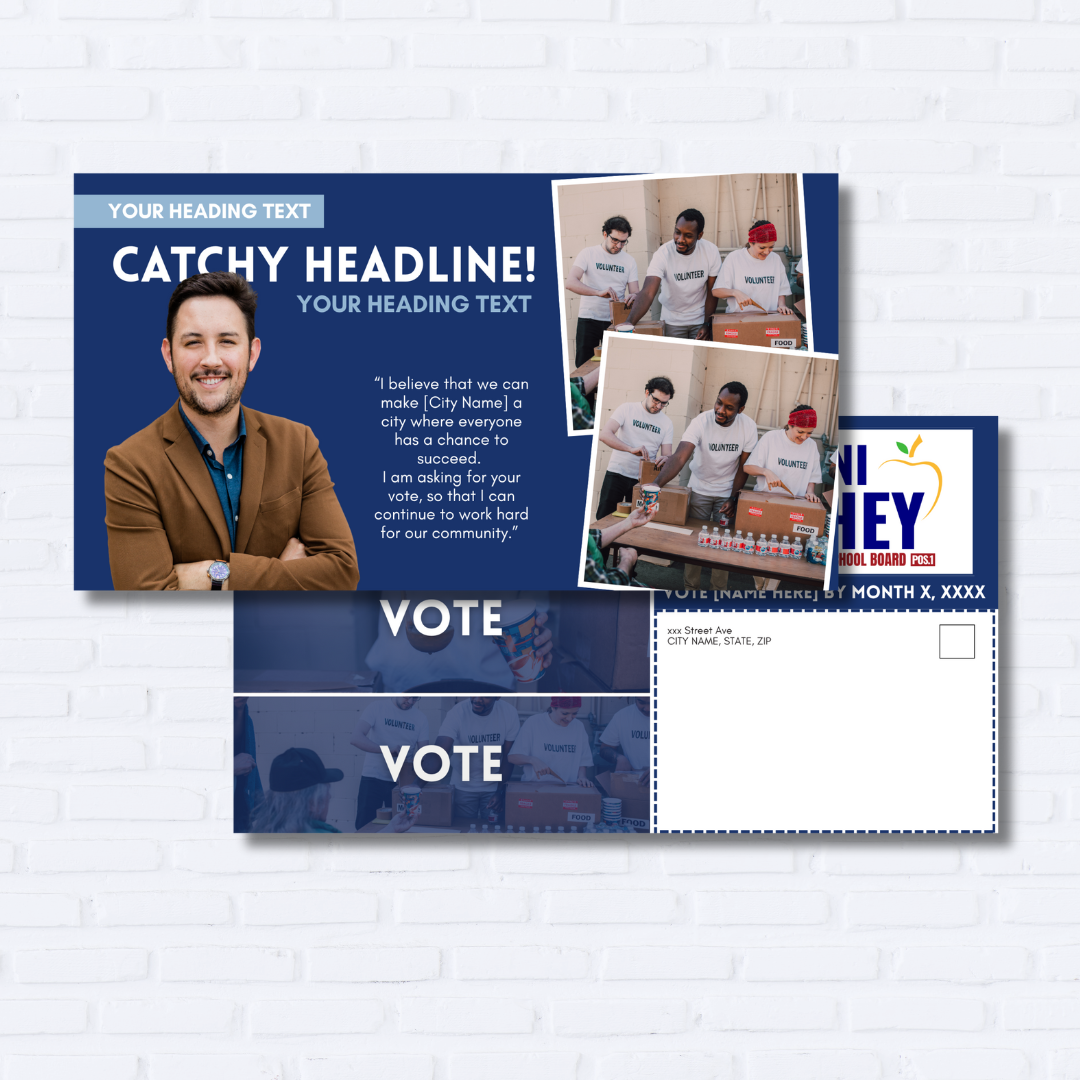
Select your mailer size (most campaigns use 6.25×11). Keep it simple: candidate photo, name, slogan, 3–4 issues, and a clear call-to-action like “Vote November 5” or “Learn more at [website].”
Step 3: Print and Prepare Bundles
Each route must be bundled in stacks of 50 or 100, labeled with a facing slip (your print vendor can do this, EDDM forms: PS Form 3587).
Step 4: Drop It Off or Let the Printer Handle It
You can drop off your bundles at the local post office serving your selected routes, or choose a printer that offers “print + mail” services and handles it all.

Best Practices for EDDM Campaigns
- Send multiple waves. Name recognition builds over repetition; consider mailing 2–3 times per voter.
- Time your drops. Drop your EDDM campaign 4–6 business days before you want voters to see it
- Match your message to the moment. Early mailers introduce you; late mailers should push turnout.
- Combine with digital. Mention your website or QR code to blend offline and online engagement.
- Track performance. Use a unique URL or QR code on each mailer batch to see which route responds best.
Common Mistakes to Avoid
- Mailing too early or too late: Always time your drop with ballot arrival.
- Cluttered design: Too much text lowers readability. Keep messaging simple and visual.
- No call-to-action: Always tell voters what to do next, “Vote by mail,” “Visit my site,” or “Donate.”
- Skipping the return address: USPS can reject or delay unmarked bundles.
The Secret to Timing Your Mailer Right
The number one mistake campaigns make with EDDM is mailing too early — or worse, too late.
You want your postcard to land in mailboxes the same week voters receive their ballots or official Voter Pamphlets.
Ballots typically drop 18–20 days before Election Day, depending on the state. For example:
- Washington State (2024): Ballots mailed Oct. 18; Voter Pamphlets mailed Oct. 7.
- Oregon (2024): Ballots mailed Oct. 16; Pamphlets Oct. 2.
You can look up your state’s ballot mail dates using your Secretary of State’s election calendar or your county auditor’s office.
💡Pro tip: Drop your EDDM campaign 4–6 business days before you want voters to see it. USPS typically delivers within 2–5 days of drop-off, depending on route volume and location.
That timing ensures your message hits right when people are voting, not weeks before when ballots aren’t even out yet.
Final Thoughts
or new candidates and small campaigns, EDDM is the simplest way to reach every voter in your area without paying for an expensive mailing list.
The key is timing — plan your mail drop around ballot delivery, keep your design clean, and budget for both printing and postage early.
If you want an easy way to design your campaign mailers, check out my Etsy Shop, Design with Jackson for editable Canva templates that are already sized for USPS EDDM.
And follow along on Instagram (@DesignWithJackson) — I post quick videos showing how to set up political postcards, mailers, and campaign flyers step-by-step.

References
- Presort Inc. Direct Mail Trends and Stats for 2023.
https://presortinc.com/direct-mail-trends-and-stats-for-2023/